
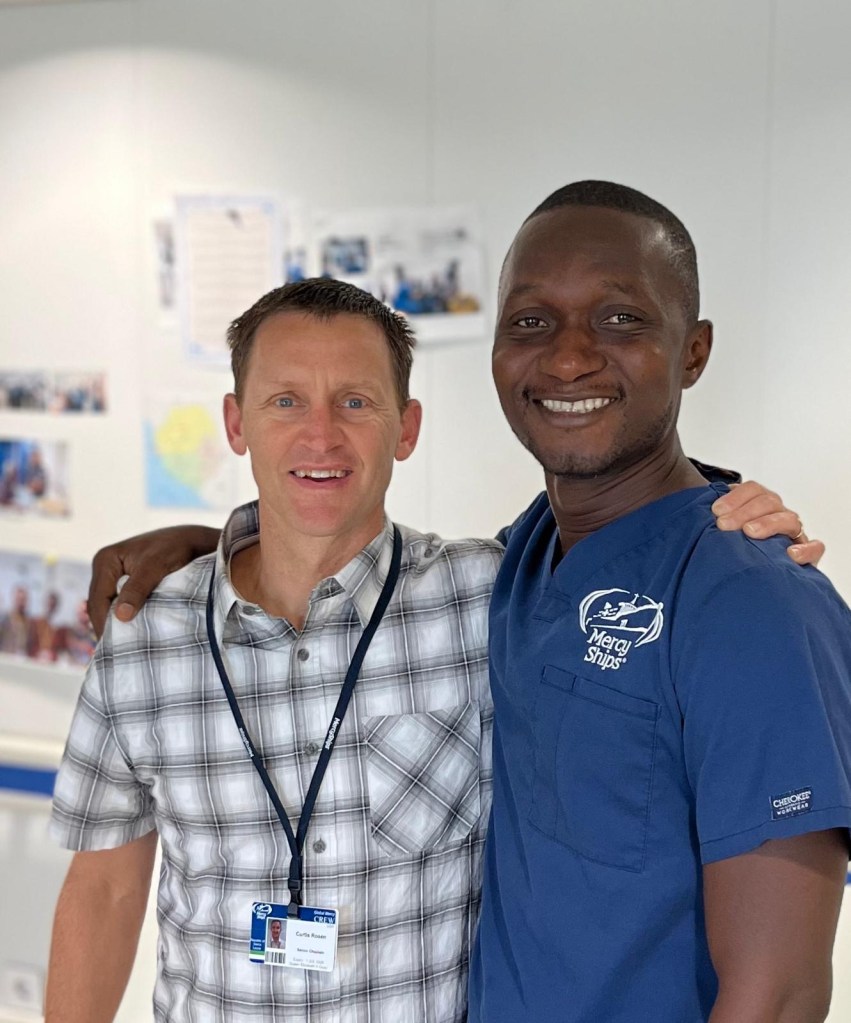
A couple of weeks ago during our chaplaincy prayer time I was captured by the prayer of Moses. Moses, one of our chaplains from Sierra Leone, prayed thanking God for breakfast. He also thanked God for lunch and dinner in advance. Not once have we missed having an adequate meal on the ship, so I anticipated there might be something more to his prayer. Afterwards I asked him how many meals the average Sierra Leonian typically has in a day. He kind of chuckled and said that it depends. He said it’s not really about how many meal times there are in a day, but instead, will there be food for those meals?
Then he told me that here in Salone (Sierra Leone) some will rate their days with unique number sequences. Like, 0-1-0, 0-0-1 or 0-1-1. These sequences simply tell the story of whether there was food at breakfast, lunch and dinner throughout the day. So 0-1-0 means no breakfast, there was lunch but no dinner. And 0-0-1 means no breakfast, no lunch but there was food at dinner time. Food is hoped for at least once a day. So I asked Moses further if there is lunch for kids at school and he laughed and said “no”. So in the United States we debate about whether there should be free lunches for all kids and sometimes breakfast too. While in Sierra Leone, children will often go without either one, whether at home or in school.
At the same time Sergine, another chaplain on our team shared a wise saying from her growing up in a refugee camp in Zambia. “It’s best to have your food as close to tomorrow as possible in case you don’t get any food for tomorrow.” Food is certainly something that I have taken for granted all of my “western world” life. I fear that I pray over my meals more out of routine sometimes than out of gratefulness for Gods provision. In living with my African friends I am learning a whole new significance to the prayer that Jesus taught His followers to pray, “Give us today our daily bread…” (Matthew 6:11)
As I spend lunch times with my Day Crew friends, (local Sierra Leonians who come on board each day to serve with us in the mission) we often joke about my lack of ability to eat spicy food. You see here in West Africa high spice food is the norm. As I learned just the other day, apparently Liberians are the ultimate spice champions. Apparently no one appreciates spice quite like those in the nation just south of us.
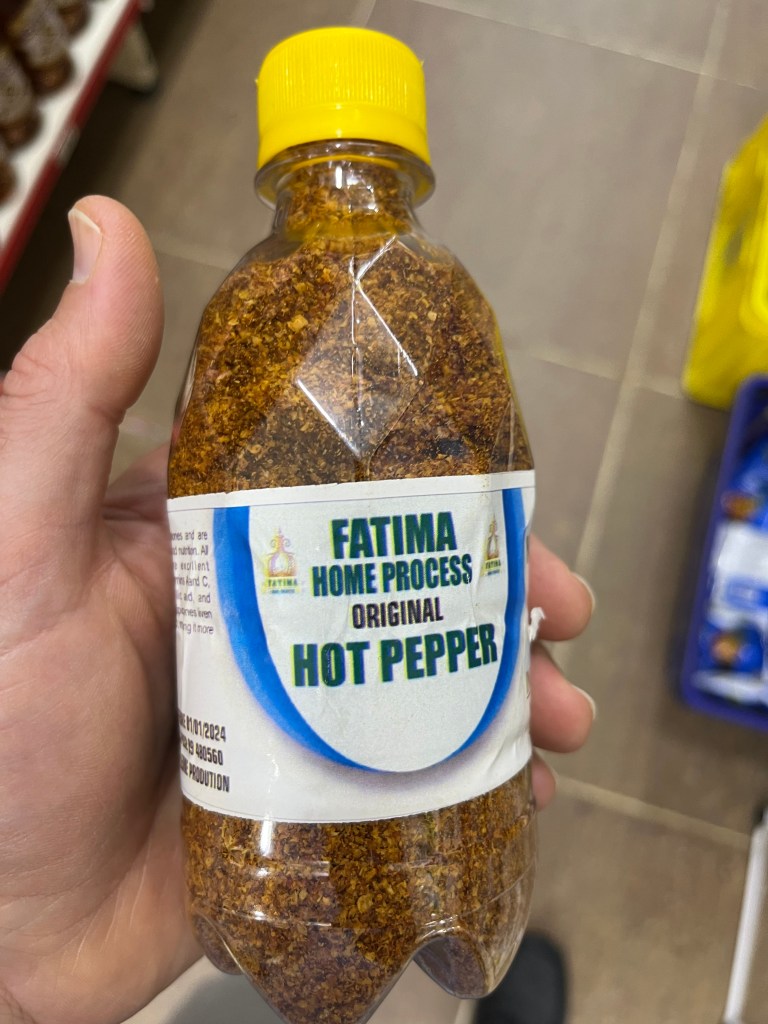
One day as I talked to some of my African friends, their thoughts quickly turned to the spiciest food they had ever eaten. One friend laughed almost embarrassingly and he proceeded to tell me that there were days when he was growing up that he would get home from school and there would still be no food in the house. So he would take the container of spicy dried pepper mix and pour some in a cup. Then he would mix some water in it and drink it straight. The heat of the spicy water would at least cause him to forget about his hunger pains even if temporarily.
As I continue to spend time with my new friends, I am learning some important lessons. I’m learning to not take things for granted or be wasteful. I’m learning the importance of depending on God one moment at a time and one meal at a time. I’m also learning to pay attention to the subtle hints and important lessons that can be learned from hearing other people’s stories. My prayer is that in telling their stories, you too would be more aware of the struggles of those around the world.


 Rosen Journey
Leave a reply to Calpeters Mbogoh Cancel reply